The old train station of Luméville (La Gare) is located on the railway line that would be used by shipments of nuclear waste for Cigéo. It was expropriated in 2025, then evicted in 2026. Nevertheless, the struggle continues : How many CASTOR trains will pass through our place and for how long? What is line 027000? And what is the ITE? Here are answers to the challenges of potential rail transport of nuclear waste to Bure. These elements are mostly taken from the manual on nuclear waste transport of the “Tchou tchou” collective (in french).
The nuclear transports for Cigéo
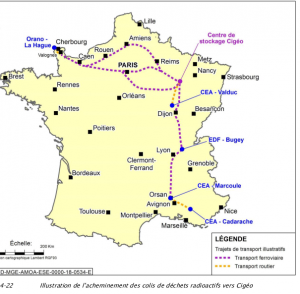
In the case of Cigéo, ANDRA planned that the majority of radioactive waste would be transported by train from their current storage sites, located mainly at La Hague (Haute-Normandie), Marcoule (Gard) and Bugey (Ain). It is primarily HA-MAVL waste (high activity to medium activity with a long life), radioactive for hundreds of thousands or even millions of years.
At the peak of Cigéo’s activity, ANDRA is expecting about 60 CASTOR trains to pass through each year (5 per month or 1 to 2 per week), to which 110 trucks would need to be added to transport the radioactive waste resulting from the manufacture of atomic bombs, from the CEA factory located in Valduc (Côte d’Or).
The transport related to the work
For this project, which has been operating for at least 130 years, transport would not be limited to radioactive waste transported by rail or road. The staff, the excavated soil, the equipment and materials necessary for the construction of Cigéo’s infrastructure and its operation would from the start involve constant transport (cars, trucks, construction machinery, exceptional convoys, etc.). At the peak of the construction phase, Andra plans to move 210 trucks per day, which would lead to premature road wear, dust clouds, air pollution and high noise levels.
More than a century of heavy work to be expected
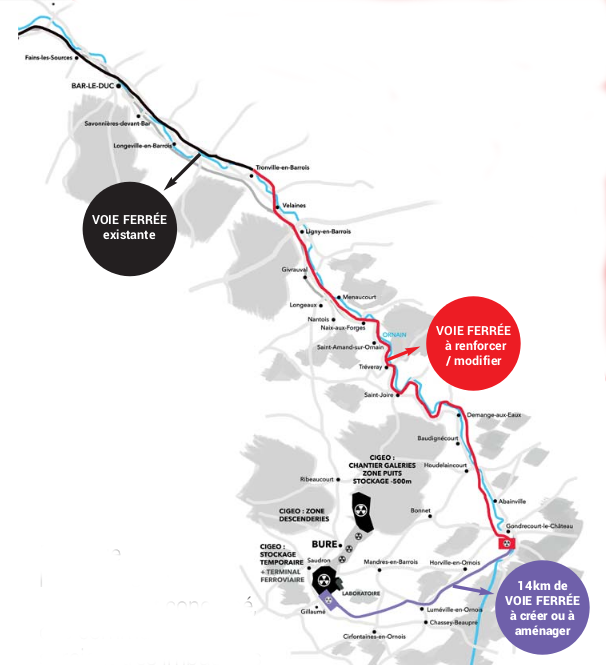
As the transport of this waste is mainly by train, two major projects would take place to connect Cigéo to the national rail network. Although the entire territory is concerned, these municipalities would be greatly impacted by the passage of rail and road convoys near Cigéo :
Nançois-sur-Ornain > Velaines > Ligny-en-Barrois > Givrauval > Longeaux > Menaucourt > Nantois > Naix-aux-Forges > Saint-Amand-sur-Ornain > Tréveray > Laneuville > Saint-Joire > Demange-aux-Eaux > Baudignecourt > Houdelaincourt > Abainville > Gondrecourt-le-Château > Horville-en-Ornois > Luméville-en-Ornois > Chassey-Beaupré > Cirfontaines-en-Ornois > Guillaumé > Saudron
Renovation of line 027000
Work should take place by the end of 2020 to connect Cigéo to the national network via the Nançois-Tronville station, located on the Paris-Strasbourg line. SNCF Réseau is to carry out the renovation of the section of the railway line from Nançois-Tronville to Gondrecourt-le-Château (closed for decades), 36 kilometers of tracks currently comprising 59 level crossings.
Many dwellings are located along this segment of line 027000. The residents would therefore suffer significant nuisances from the rehabilitation of this section of line. The nuclear convoys would pass over the level of windows and gardens for many houses.
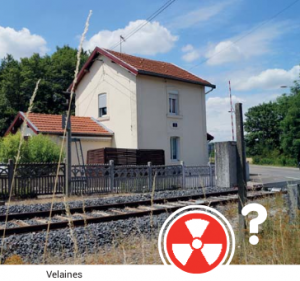
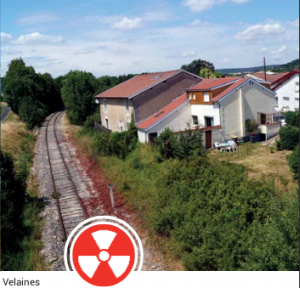
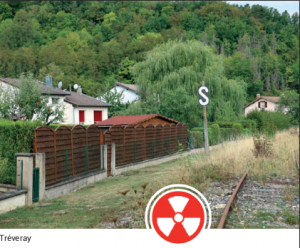
The line already belonging to the SNCF, ANDRA has planned to launch the construction site without any prior authorization : a way to put the population in front of the accomplished fact?
Update 2025 : the first works (drillings) are just starting as part of the preparatory work (DR0) : https://bureburebure.info/en/inspection-surprise-des-forages-sur-la-voie-ferree/
Creation of a new route (ITE)
To connect Gondrecourt-le-Château to the storage center itself in Saudron, the Embranchée Terminal Installation (ITE) would be created. This 14-kilometre railway would allow the construction materials needed for the work to be transported directly to the Cigéo site, followed by the packages of nuclear waste during operation.
The Ancienne Gare de Luméville (La Gare) is located on the route of the ITE. It is a plot of land purchased in 2007 by opponents of the project. Place of struggle, it has hosted many events and camps over the years. La Gare was expropriated in 2025, then evicted in 2026 (because the project was recognized as being of public utility).
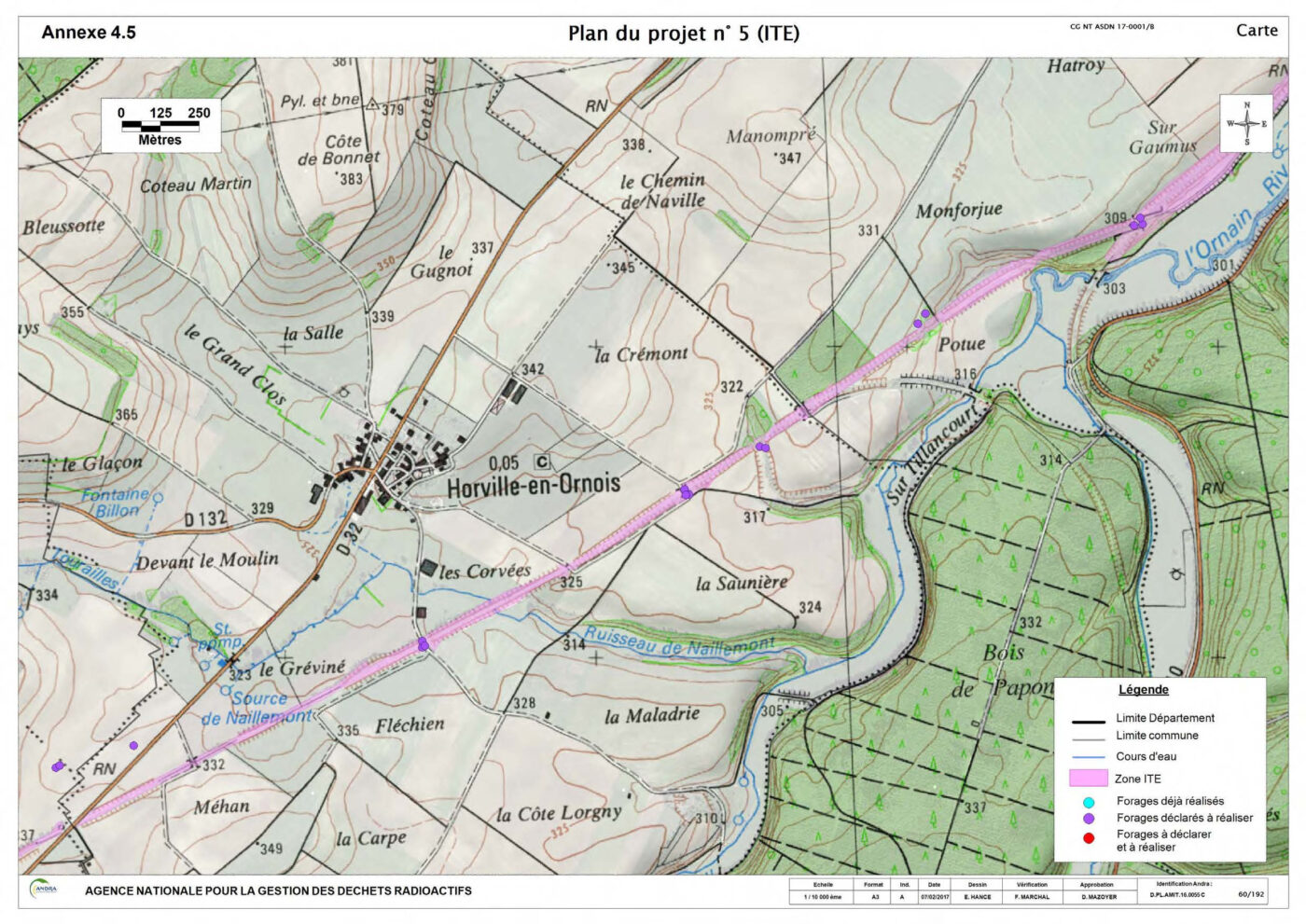
The track crosses Gondrecourt then forks to the west to head towards the downhill area of the CIGEO project.
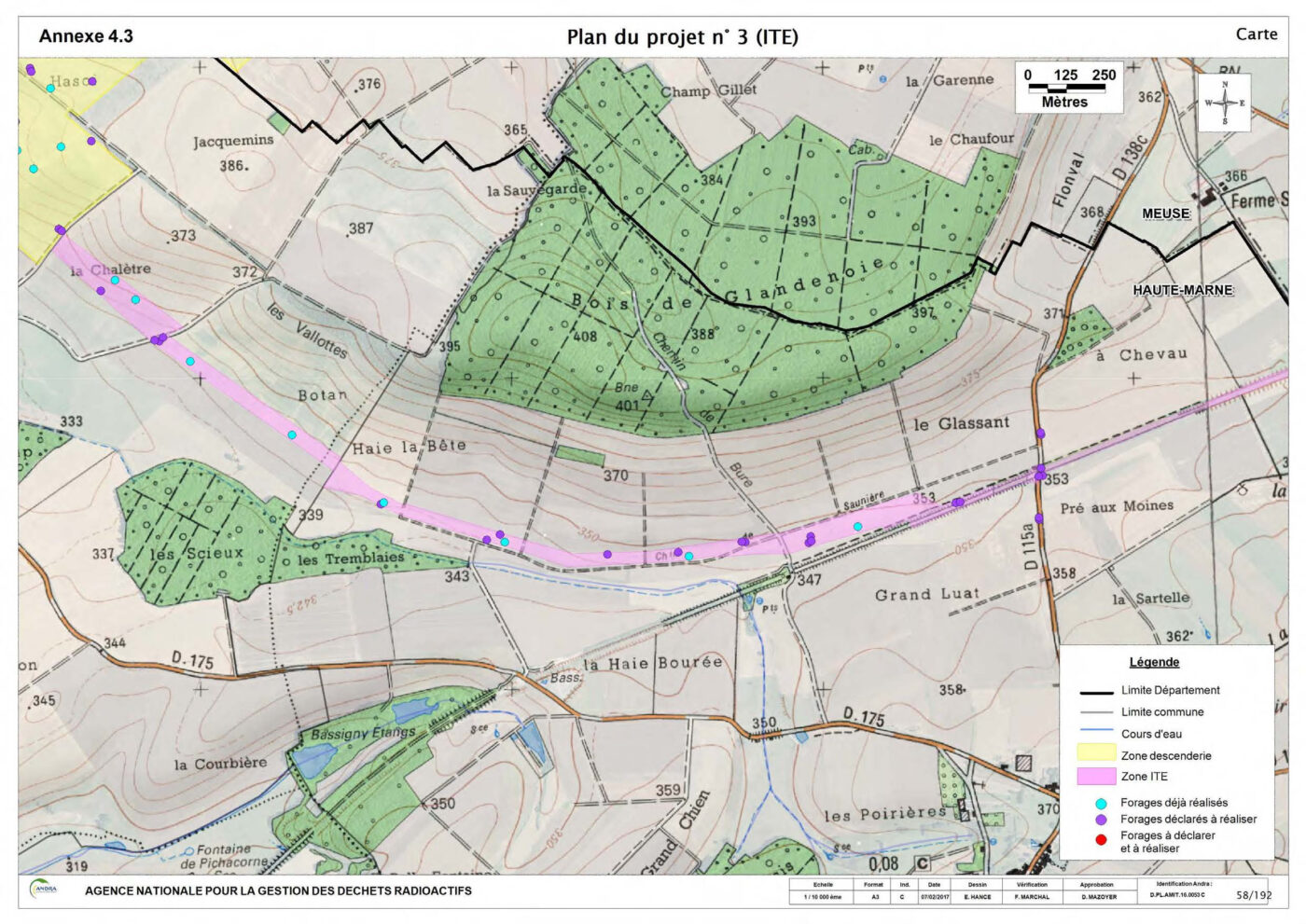
This image shows the section of track that will be built through fields (purple), from the old track to the future CIGEO project station (yellow)
Reinforcement of roads and deviation of agglomeration
The territory’s road traffic would be greatly intensified, both for the needs of the colossal construction site in anticipation and for the transport of multiple waste packages to Cigéo. A large part of the road network would be profoundly modified, even deviated for certain agglomerations.